
Registration is closed
| 一般チケット 1 | Free |
|---|---|
| 一般チケット 2 | Free |
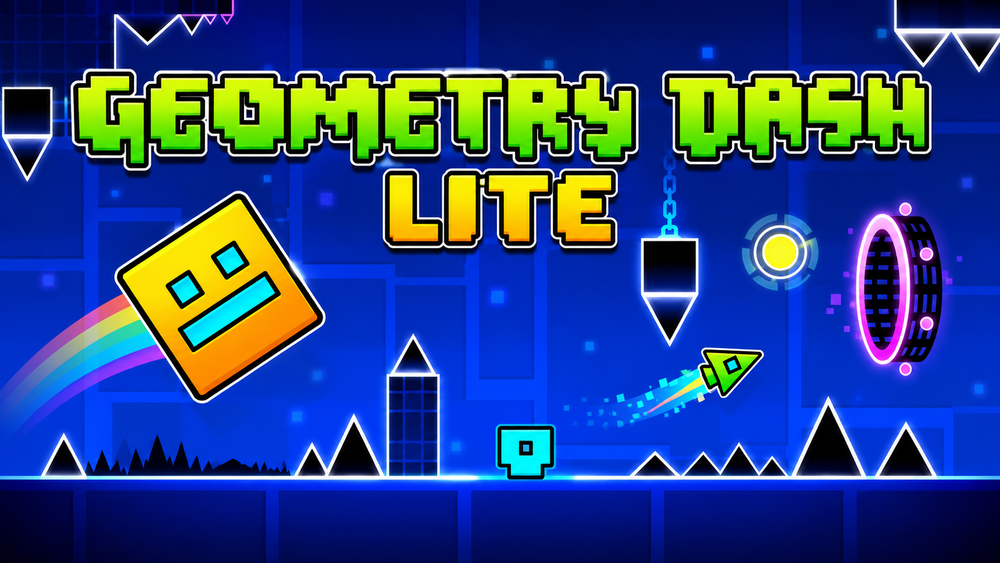
Geometry Dash Lite is where almost everyone starts, and it is where many players hit their first real wall, usually on Dry Out or Base After Base. Those levels introduce mechanics that catch new players off guard.
This guide focuses on Geo Dash Lite specific tips, showing you how to beat its levels, use Practice Mode better, handle common mistakes, and build the skills needed to finish the game's toughest free challenges.
Geometry Dash Lite includes a selection of official levels that become harder in a fixed order. The early levels are designed to teach one mechanic at a time, so most players hit their first real wall on Dry Out or Base After Base, not because the game suddenly becomes unfair, but because it introduces new mechanics.
Stereo Madness
Back on Track
Polargeist
Dry Out
Base After Base
Can't Let Go
GD Lite has gained more official levels through updates, but these early stages remain the foundation of the game's learning curve. If you can beat them consistently, you'll have the skills needed for the harder free levels that follow.
Geometry Dash Lite feels harder than it looks because each level teaches a new mechanic instead of simply adding more spikes. The difficulty comes from learning unfamiliar controls while staying on beat. Most players get stuck when a new mechanic appears, not because they suddenly become worse at the game.
Back on Track introduces jump pads. Polargeist adds jump orbs that need well-timed taps. Dry Out changes gravity with portals, forcing you to read the level differently. Base After Base combines these mechanics, making mistakes happen more often.
The biggest mindset shift is simple: when you hit a wall, ask "What's new here?" before asking "Why am I bad at this?" In most cases, the answer is a new mechanic that needs practice, not a lack of skill. Once you learn that mechanic, the level usually becomes much more manageable.
Practice Mode works best when you place your checkpoint two or three seconds before the obstacle that keeps killing you. This helps you learn the full approach instead of only repeating the final jump.
Most players place a checkpoint right next to the spike or portal. That skips the setup, which is often the real reason they fail. Move your checkpoint farther back so you practice the timing that leads into the difficult section.
Practice Mode changes the rhythm because checkpoints break the flow of the level. After you can clear a section in Practice Mode, always test it again in Normal Mode to make sure your timing still works.
Split the level into 0-30%, 30-60%, and 60-100% sections. Learn each part on its own before trying a full run. This method helps you reach difficult sections more consistently instead of repeating the easy beginning over and over.
Ads are one of the biggest challenges in Geometry Dash Lite because they interrupt your rhythm between attempts. Since the game depends on timing and muscle memory, a forced break can make your next run feel less consistent.
Instead of fighting the interruption, use it as a reset. Finish your Practice Mode run before starting another serious attempt, take the ad as a short break, and avoid jumping back in while you're frustrated. A few seconds of resetting your focus often leads to better attempts than rushing back into the level.
If you want uninterrupted practice, browser versions like GeoDash.org let you play Geometry Dash online without the same pattern of ad breaks.
Geo Dash Lite mainly teaches the Cube, Ship, and Ball game modes, and each one requires a different approach. Many players struggle because they use the same tapping style for every mode, even though each one rewards different timing.
Cube - The Cube is all about controlled taps. Press once for each obstacle instead of spam clicking through jump orb sections. If you are tapping more times than there are obstacles, you are probably making the level harder than it needs to be.
Ship - The Ship rewards small, controlled taps instead of long presses. Many players hold too long, hit the ceiling, and blame the level. Try to stay near the middle of the corridor so you have room to adjust in both directions.
Ball - The Ball flips gravity with every tap. One tap should mean one gravity change. Avoid double-tapping when you panic because it often sends you into spikes.
Fix Your Worst Mode First - Your progress in GD Lite is usually limited by your weakest game mode, and for many players that is the Ship. Spend a few minutes practicing that mode instead of replaying the whole level every time.
Players who finish Geometry Dash Lite rely on consistency more than fast reflexes. Small habits repeated every session help more than making hundreds of random attempts.
Move on from Geo Dash Lite when you can beat its hardest levels consistently, not just once. One lucky completion does not always mean you have mastered the mechanics. If you can clear the same difficult level two or three times without relying on luck, you are ready for a bigger challenge.
Repeating a difficult completion shows that your timing and muscle memory are becoming reliable instead of random.
After GD Lite, try Geometry Dash SubZero or GD World for more free levels. If you want the Level Editor, millions of community levels, and the complete experience, move to the Geometry Dash Full Version. Finishing Lite already puts you ahead of many players who never make it past the early levels.
Yes. Geometry Dash Lite can transfer progress to the full version through RobTop's cloud save system. Save your progress in Lite, sign in with the same account in the full game, and use Load to restore your unlocked icons, colors, stars, and other supported progress.
Theory of Everything is widely considered the hardest level in Geometry Dash Lite. Its fast pace, frequent game mode changes, and tight timing make it the toughest challenge for most Lite players before moving to the full game.
Every skilled GD player started somewhere, and for many, that place was Geometry Dash Lite. The key to finishing its levels is practicing the right sections, learning each new mechanic, and staying consistent instead of rushing attempts.
Pick one tip from this guide, use it in your next session, and you'll make steady progress toward beating Lite's toughest levels with confidence.

Learn why Geometry Dash Lite is harder than it looks and discover Practice Mode tips, game mode strategies, smart habits, and ways to beat its toughest levels.
Join community